Saturday, August 15, 2026

Lovecraft's Brood: Tales of Horror Worthy of Cosmic Intervention

 book cover for Lovecraft’s Brood

Author: A.C Wise, T. Kingfisher, Paul Tremblay, Catlin R. Kiernan, Laird Barron, Norman Partridge, Elizabeth Hand, Aaron Dries, Conrad Williams, Steve Rasnic Tem, Brian Hodge, etc.

Genre: Horror, Science fiction, fantasy, horror, anthology, short stories, queer themes 

Publisher: Tachyon Publications

Format: NetGalley E-book

Release Date: July 21st, 2026

Editor: Ellen Daltow 

TW:  death, murder, suicide, cancer, sexual assault, rape, cannibalism, immolation, body horror (transformation into a meat thing), eyes, heights

This was a bone-chilling collection of stories that I was alternately scared and glad to read. These stories capture the spirit of Lovecraft in a perfect way, blending the themes he used with relatively modern stories. 

Lovecraft's Brood is all about the monsters that lurk in the bark and walk brazenly in the light. It is about the haunting of grief and love turned sour. The language in each story is different, and some of it may not cut as sharp, however, all of it is definitely readable. I particularly love the language in 'Sideways' as it has stuck with me for a while. There were a few stories where I was cold, but the uniqueness and 'stickiness' of others kept me reading. 

I wish there was PoC representation here, which is my only true criticism. I like seeing Lovecraft's racist ideas being refuted in works with play with his themes, but you won;t find that here. These stories also deal with extreme topics related to cosmic horror and horror more mundane. 

I recommend this anthology, to see Lovecraft's themes brought into the modern day. Mind the trigger warnings, and maybe sleep with the lights on. 

Final rating: 4 out of 5 stars

Tea paring:  Black tea, dark as the void


Wednesday, July 8, 2026

Perverts: Viseral Queer Horror and Lust

book cover for Perverts

Author: Mac Crane

Genre: Queer lit, short story collection, horror (at least, I believe so), erotic fiction, humor (in a dry laugh way)

Publisher: Random House-The Dial Press

Format: Ebook (NetGalley Copy)

Release Date: July 7th 2026

TW: hate crimes, homophobia, slurs, parental abuse, eating disorders, body dysmorphia, suicide, drug use, toxic therapist client relationship

Perverts made me viscerally uncomfortable, aware of my place in society and my body in a way that  no other short story collection has. I gasped out loud at a few passages, and felt my own teeth clench. 

Which is fitting because Perverts is a collection of bodies. Bodies that get bashed for money, bodies that revel in sexuality even if it's distasteful. Especially if it's distasteful. Power is bound up with pleasure is bound up with pain.

Along with all of these threads there is a frank sexuality that is kind of refreshing. Kink is matter of fact, and sex is a key point here, intimately bound up with the queer experience. It's quite refreshing to read after the non sexy puritanical world we live in. (As an ace person who is okay with sex, it's so stigmatized.)

I wouldn't recommend this collection to everyone (mind the probably incomplete TWs), but some stories will be sticking in my mind for a while. If you like queer visceral hilarious horror, pick this collection up.

Favorite Stories: Smear the Queer (horrific) and FuturewivesTM (cathartic)

Least Favourite Story: An Experiment With Predictive Text (unreadable) 

Thanks to Random House and NetGalley for the ARC! 

Final rating: 4 stars

Drink Paring: Black tea and a shot of vodka, to feel the burn 

Tuesday, June 30, 2026

Contrapposto: An Examination of A Life With Art


book cover for Contrapposto

Author: Dave Eggers

Genre: General fiction, adult, romance

Publisher: Knopf, Pantheon, Vintage and Anchor

Format: NetGalley E-book

Release Date: June 9th, 2026

TW: Period typical homophobia, drug use, homicide, suicide, nudity (non sexual, in a life drawing context), mentions of war and death in war, cancer

This novel was a typical David Eggers joint; searing, character driven and incredibly vivid. However, there were some flaws, particularly in the portrayal of women. But first, the plot.

Cricket Dib is a man in love with two things: art and the woman who encouraged his love, Olympia. As Cricket grows, and  deepens as an artist, his relationship with Olympia also changes. They drift apart and crash together through different continents and times. Cricket also has to deal with the art world, and really discover what his art means to him.  

This is a character story first and foremost, and in that, the novel excels. Cricket is a well realized character. He has flaws (mainly passivity) and strengths. The fact that the novel is in 3rd person limited POV makes it easier to be in his mind as well. However, some may see Cricket as 'boring.' I understand that, as he does have solipsistic tendencies. However, I was always on his side, and was devastated when terrible events would happen in his life. His relationship wiith art, the thing that never really leaves him, is the main theme of the book, and this theme carries the narrative.

This close  view excludes other characters, however. I wanted to like Olympia, I really did, but she was a stereotypical 'crazy woman.' I felt her pain, and felt sympathy for her, but she would often do things that made her unrealistic. Her family life was lightly touched on, and her motivations were also light on the ground. 

This odd way that women were written extends to come of the side characters (like a millionaires dissatisfied wife) mere reflections of Cricket. I wish this wasn't the case. The male side characters, like Carpenter and Jed in specific were more fleshed out. 

Despite this, I really enjoyed the novel, and the illustrations (Cricket's sketchbook) were amazing too. Mind the trigger warnings, and you'll find a vivid read. 

Thank you to the publisher and NetGalley for the ARC! 

Final Rating:  4 out of 5 stars 

Drink Paring: Black tea while looking out of the window


Saturday, June 27, 2026

Saturn Returning: Queer People As People

 book cover for Saturn Returning

Author: Kim Narby

Genre: General fiction, new adult, romance elements, women's fiction, LGBTQ rep

Publisher: Bindery Books

Format: NetGalley E-book

Release Date: May 5th, 2026

TW: sexual assault, rape, thoughts of self harm, paranoia

This book was a  harrowing read, and really stuck with me after I finished it. But first, the plot:

Trace and Jordan are two queer women who meet in college, after Trace compliments Jordan's clothing.  Soon after, they are joined by Sylvia, a woman whom they both believe is untouchable in some way. Sylvia has damage and holds herself apart, and so when she starts hanging with Trace and Jordan, she opens up. All three of them end up in a queerplatonic relationship while trying to navigate life.However, later, Trace and Sylvia get married and Jordan moves on to a job on a different coast, changing the dynamic again. Why did these people split? Will they manage to reconcile in the end, and navigate a new season of their lives together?

First, I loved the way the prose was written.  The third person limited perspective felt stifling in certain moments, but held the reader enough at a distance as to not overwhelm them. The PoV's were all very distinct, however, I had a bit of trouble following time shifts (some of the chapters are in flashback). I believe that was because they were captioned things like '8 Years Before Saturn Returning." 

This is a character driven story, and predictably, the characters were the best part of the book. They were so real that they were uncomfortable at points. None of the characters are wholly 'good'. They are people with their own flaws, and oh boy are they flawed. Trace in particular was one of my favourite characters, but difficult to read about due to her extreme paranoia and neediness. However, this was realistic and I commend the novel for that. There are explicit sex scenes here, as sex is a natural part of these character's lives, and they were well written.  (I also appreciate that the tarot readings were accurate!)

Other side characters were again, sketched thin, but they very clearly had their own lives. However, most of the focus was on our three main characters.  

Mind the trigger warnings, people, and you find a coming of age story with depth and richness. I can't wait to read more from this author!

Thank you to the publisher and NetGalley for the ARC!

Final Rating: 4.5 (rounded up to 5) stars

Drink Paring:  Oolong, deepening from dark to light for each steep


Wednesday, June 24, 2026

Metal Slinger: A Middling Romantasy With A Terrible Twist

 book cover for Metal Slinger 

Author: Rachel Schneider

Genre: Romantasy, fantasy, new adult, LGBTQ rep (minor)

Publisher: St. Martin's Press

Format: NetGalley E-book

Release Date: June 17th, 2025

TW: Gaslighting, blood, death

I absolutely loathed this book, and it reinforced the fact that romantacy is a feast-or-famine genre for me. I kept reading out of morbid curiosity, and I was definitely dissapointed  But first, the plot:

Brynn is a part of the Alahan guard, despite not being Alahan herself. The Alahans live on mangrove groves, driven away from solid ground for a crime in the past. When Bryn heads to the market run by the Kenta with her young guard friends, she is accosted by Acker, and due to those circumstances causes an international incident. When Acker gets captured by Alahan guards, Brynn is drawn to him, and learns who she really is, and how she's connected to the Kenta mainland. 

I thought that the premise of the book was interesting. The premise promises a mystery, and Brynn's true origins feed into the mystery as well. The mystery unfolded at a decent clip as well. 

Unfortunately, the premise is the only thing with potential in this book. Take for example, the characters. Acker is incredibly annoying, and about as emotionally compelling as a plank of wood with a bad-boy face drawn on. Brynn is also childish and naive, which could be forgiven if the narrative didn't treat her as incredibly competent. (For example, she disdains eating off a knife during a shipwreck that Acker used to kill someone). The rest of the characters are thinly drawn, and they all kind of blend together, along with the sex scenes which are plentiful and boring. I do appreciate the slight LGBTQ rep and a few POC being in the setting however. 

If the characters are bad, the prose is even worse. the aforementioned knife is referred to as a 'murder knife,' and underwear that Brynn has access to later is described as 'butter underwear.' These descriptions are incredibly juvenile, jarring and immediately take me out of the story. I also don't appreciate the constant exposition, which is often out of place. The close POV (1st person) doesn't help.

The setting is so thin that again, it all blends together. The one interesting thing about Alaha for example is that it is a part of a mangrove forest. Kenta meanwhile is a generic medieval country, and is not distinguishable from its neighbors.  

However, none of this is what made me mad about the book. What accomplished that is a 'twist' that insults its audience and should not be possible because of the POV of the story. When I reached the 'twist' I audibly said 'oh go fuck yourself' and only finished the book because there were a few pages left. 

I will not be reading the sequel as I don't really care what happens to these characters. Maybe someone will think differently from me, and enjoy it.

Thanks to the publisher and NetGalley for the ARC!

Final Rating: 2 out of 5 stars 

Drink Paring: Metallic tap water (for the character's powers)


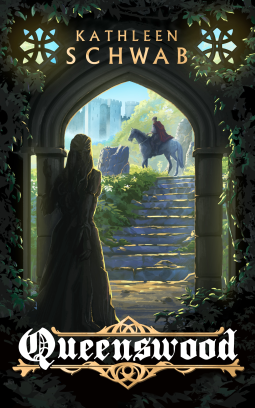
Queenswoood: A Faerie Tail Of A Fantasy


book cover for Queenswood

Author: Kathleen Schwab

Genre: Fantasy, Romantic elements,historical fiction slight LGBTQ rep 

Publisher: Blackstone Publishing

Format: NetGalley E-book

Release Date: June 16th, 2026

TW: Murder, implications of slavery and rape, kidnapping, childbirth, imprisonment towards marriage.

I love stories involving the fae, and this novel felt like a faerie tale in the best and worst ways. But first, the plot:

Rhiannon, an Irish noblewoman after the Norwegian invasion, longs to leave her lonely life in her family's manor. Her siblings have gone to create their own lives by getting married, or are too old for her to relate to. She has a curious mind, and eventually sees herself devoted to learning and God.  Angus, the fae High Prince is also lonely. He keeps to himself, and finds court life stifling. He'd much rather roam the wilds of the fey realm. However, this all changes when Angus receives a prophecy of marriage: he must bring a mortal woman to the marriage alter (the first among years) or his family line will fail. When Angus pursues Rhiannon, her decision will determine the destiny of Angus's line and the fae nobility in general. 

The characters were the best part of the book. Although they were held somewhat apart through use of third person limited POV, I was able to distinguish all three main perspectives from each other. Angus for example is more closed off. I lved Rhiannon the most, however. I related to her as a bookish dreamer, and was saddened when she was taken from the Abbey she found peace in, and was happy after she found a new path forward. I also was surprised by how much I liked Cormac, a farm-boy who falls for Angus's sister and a man who was way in over his head. I had no trouble with the POV's but some might which is understandable. I appreciate that the fae are different from the humans but still parse-able to the reader. I appreciate that queerness was acknowledged among the fae as well. 

I also really enjoyed the tone of the book. It reads like a fairy tail, and the prose also matches that. (In fact, a bunch of fairy tales are adapted and put into this book, riding off the original story.) However, due to this, there are only a few locations that are very vivid. Most other places are sketched in, which may cause some friction to certain readers. Like a fairytale, the romantic elements in this book are not explicit, and fade to black.  

The fairy tale-ness of this story can also be its biggest downfall, as the ending is very abrupt and final. I resonated with it, but some readers who are expecting series potential may not. There are also darker tropes of fairy tales that are used, like the marriage as abduction trope, and slavery (humans towards fae and human raiders selling other humans). This is not gory or violent, but it is important to the plot.   

If you're looking for  a dreamy read, even if things might seem a bit distant, I would recommend this book. 

Thanks to NetGalley and the publisher for the ARC!

Final Rating: 4 out of 5 stars

Drink Paring: Green tea to match the Queenswood

Sunday, June 21, 2026

Under Story: A Moving Tale of Motherhood, Grief and Mushrooms


book cover for Under Story

Author: Chloe Benjamin

Genre: Science fiction, literary fiction, new adult, incidental LGBTQ rep

Publisher: Putnam

Format: NetGalley E-book

Release Date: September 1st, 2026

TW: Death of a child (moment is off page, but the lead up isn't), drowning, pregnancy and reverse birth, Altzheimers, sexism

Despite a mind breaking premise that I had to double back on because it got confusing, I loved this, well, novel novel. But first the plot:

Laurel Salter is a mycologist, currently living at the McMurdo base in Antarctica, working as a steward. Like most of the crew there, she is fleeing life on the mainland or at least trying to move on from her problems. However, everything changes when The Arc shows up over the ice, a shifting dome of aurora lights that don't exist anywhere else on Earth. Laurel starts dreaming of The Arc, and her life becomes even more precarious when her ex-husband Eli comes to document the anomaly. Laurel begins to believe that The Arc is a gateway into the universe that Eli has spent half his life studying, the mirror to our own where time runs backward (for example; a collector's antique artifacts in 2019 are floating beds and hi tech windows that barely work). Laurel will stop at nothing to get to this universe, to correct a mistake that took the life of someone they both treasured. 

I simultaneously loved and hated the worldbuilding of this novel. The concept of a mirror universe where time runs backwards is actually quite unique. However, in the second half of the novel, when Laurel and Eli were in this mirror universe, I was sometimes very confused. The dates go backwards, and doing the mental math to figure things out like ages was hard; in addition to this, the conceit of what birth and death are in this mirror universe where genuinely hard to grasp until deep into the last act of the book (both are genuinely horrifying). I also like that Laurel tried to live in this new universe fully, and didn't treat it as her own personal trial. (The science was interesting to me too, and felt relatively plausible, and I appreciated the detailed explanations.)

The themes' exploration of grief and motherhood that began the book was also powerful to me. Laurel has very clearly stopped coping with her grief and has pinned her hopes on this other universe, and you can see that in the way she interacts with the people at McMurdo and Eli, when he comes to the base. I think that this feeling of grief really anchors the flashbacks we experience, and acts as a sufficient through line to keep readers from getting lost. However, some readers might find the flashbacks confusing which is completely understandable; the book is in third person limited which ads to the initial mystery and keeps a distance between characters, but can make time jumps jarring. (Be warned as well, that child death happens, it is a very heavy topic, so proceed at your own risk.)

The prose was vivid and rich and extremely detailed, which might be seen by some as unnecessary, but was another thing I really enjoyed. However, again, this can bloat the book for some readers which is understandable, it is a book that invites you to see the leaves for the trees so to speak. However, this may lead to some losing the plot. 

The characters themselves were serviceable, if a bit thin. Except our two main leads, we don't spend a ton of time with them. They seem nice, but I frequently had to page back to remember who they were. I did appreciate the incidental LGBTQ rep however. I love Laurel and Eli though, two broken people trying to mend each other after a terrible tragedy.  They are written in a way that feels raw to me, and I was rooting for them both at the end. There are a few scenes of them romantically involved with each other, but this is not a romance, and the scenes are easily skippable if needed. However, they are explicit. I found them to be fine as an Ace person, although not my cup of tea. 

If you can wrap your mind around the premise, and stomach some very heady prose, you'll enjoy this book. 

Thanks to NetGalley and the publisher for the ARC!

Final rating: 4 of 5 stars 

Drink paring: Green tea for new beginnings

Monday, June 1, 2026

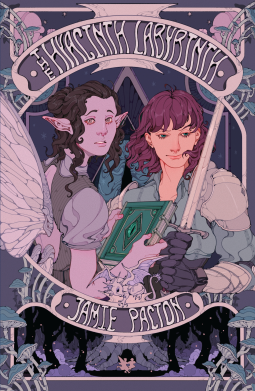
The Hyacinth Labrynth: A Lovely Romantic Fey Story For Adventrous Teens

book cover for The Hyacinth Labyrinth

Author: Jamie Pacton

Genre: Fantasy, teen, romance, LGBTQ rep 

Publisher: 

Format: NetGalley E-book

Release Date: June 2nd, 2026

TW:  Mind control, blood, injury, grief, class struggle, PTSD

This was a lovely teen read, fill of fae hi-jinks and a believable bond between two great characters. I love fae stories, and so this appealed to me instantly. But first, the plot: 

Hyacinth is the youngest daughter of Queen Mab, the Queen of the High Fae. As a princess, she should have access to powerful magic and beautiful wings, but she doesn't. Her wings are fake, and she mimics having powers through potions. This makes things worse, as Hyacinth wants to find her father, and not having magic is surely detrimental to that. The other half of this duo is Chloe Wreckersfield, a human former mapper's apprentice turned stable hand hiding as a common Fae girl. Chloe desperately wants to return to her twin sister. Hyacinth and Chloe have been seeing each other in secret and both resolve to skip that year's Solstice ball to go to a once a year market, to both find what they seek. However, they both are hiding their true intentions from one another, including their true feelings. When the market leads to a Labyrinth, will Chloe and Hyacinth be able top survive? Will they finally admit how much they mean to one another? 

This was a wonderful teen read. I loved both Hyacinth and Chloe; they both had clear character arcs and genuine struggles. Hyacinth in particular was a wonderful character; I could really feel her frustration with not having magic. At the same time she is flawed, as she was raised in a higher social class than Chloe and her prejudice does come out. I love Chloe as well, as she is very clearly a survivor, and loves very deeply. I appreciate the queer rep, as both Chloe and Hyacynth are gay, and this is a queer normative setting. There is only kissing between our two leads, and their relationship is adorable. I also appreciated the action, and tie fact that the characters get hurt. There are some real stakes. 

The setting was suitably faerie-tale like, and I loved the colorful citizens of the fae realm. However, some of the settings are a bit sketched in, but that makes sense. The ending may also feel a bit too neat. The prose is also a bit soft, which, again makes sense for the intended audience. 

I recommend this book for teens who want a breezy and heartwarming read. 

Thank you to NetGalley and the publisher for the ARC! 

Final Rating: 4 out of 5 stars 

Drink Paring: Black tea with jasmine flowers for kisses under the moonlight

Sunday, May 31, 2026

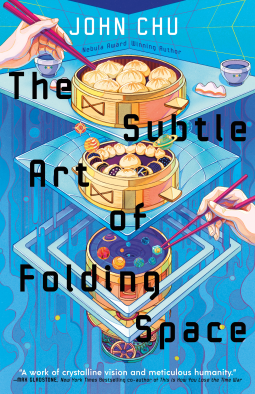
The Subtle Art of Folding Space: An Ambitious Sci-Fi That Has a Few Odd Notes

 book cover for The Subtle Art of Folding Space

Author: John Chu

Genre: Science fiction, LGBTQ rep, character drama, general fiction, BIPOC rep, Own voices

Publisher: Tor Publishing Group

Format: Ebook (NetGalley Copy)

Release Date: April 7th, 2026


TW: familial abuse, death of a family member (on page) attempted suicide (in the past, off page), funerals, mourning

I encourage my readers to also seek out Chinese and gay reviewers, as although I am a part of the queer community, I am an asexual white woman, and may miss some cultural nuance. 

This book had an amazing premise, but had a few missteps in characterization and for lack of a better term, sci-fi believably.  But first, the plot: 

Behind our universe are the pipes that maintain it (the Skunkworks). Each pipe in the Skunkworks is a law of the universe. The framework of our universe needs constant work, and repair to keep it from deteriorating. Ellie is one of these maintainers, along with her homicidal sister Chris. Their mother, who was one of the best maintainers in the planet, is dying. When Ellie finds out that someone is keeping her mother alive by kitbashing a workaround in the physics of the universe, it's up to her to choose what to do about it. Her choice will reverberate across the inner workings of the universe and more importantly her family. Will she be able to survive her choice? Will her sister ever stop trying to kill her?

I loved the premise of this book. The concept of a whole secret group of people who  keep the universe from breaking down by fixing the very laws of the universe. Each maintainer interacts with the Skunkworks differently and each way that they interact with them is unique to them. (For example,  Ellie's cousin Daniel sees the schematics as food that he can taste and readjust.) This has great potential for  characterization and conflict that the current novel barely scratches the surface of.  

I only wish that other aspects of this book were as strong. Firstly, the characterization in this novel felt off. Our main character, Ellie, is fine, however she clearly doesn't realize that she's been abused. She excuses her sister's abuse constantly and that can be hard to read for some. Also, her relationship with Daniel, a major supporting character/deuteragonist, raises a few eyebrows. She always describes Daniel as some variation of 'built like a fridge but surprisingly graceful' every time she sees him. Every time. It comes off oddly as they are cousins, and are not supposed to be romantic. 

Other than that mischaracterization, the sci-fi is a bit fuzzy. There is lip service paid to things like general relativity and quantum mechanics, but the way that both characters interact with the Skunkworks feels more like a fantasy. The jargon-laden explanations don't help with this feeling, and after parsing it, don't make sense. So be aware as a reader. 

Despite my criticisms, I enjoyed this novel, and will be eagerly looking out for a sequel. If you let the science wash over you, and can look over some raw characterization, you'll love this book.  

Thanks to NetGalley and the publisher for the ARC!

Final rating: 4 stars

Drink paring: Green tea brewed grandpa style, for fixing the universe on the go 

Tuesday, May 12, 2026

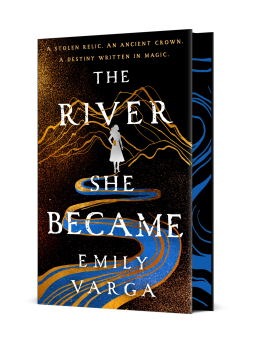
The River She Became: A Revolutionary Romance


book cover for The River She Became

Author: Emily Varga

Genre: Fantasy, romantasy, dystopia, BIPOC rep

Publisher: St. Martin's Press

Format: Ebook (NetGalley Copy)

Release Date: August 18th, 2026

TW: Death, child death (on page) racism, body horror, torture


This book was blurbed as 'The Mummy meets the Cruel Prince,' and I can see why. This was a fun read, but some aspects were weaker than others. 

But first, the plot: Yasmeena works as a relic hunter-scholar (think archaeologist) for the Citadel, the conquering empire currently oppressing her people. They've been using her knowledge to dig up her people's sacred land rejuvenating relics. These relics (of fey make) will be shipped out of her country, and put into a private museum that her people don't have access to. In addition to this, the Citadel has banned self-expression among Yasmeena's people; they can't wear their traditional clothing or bury their dead. Yasmeena has spent years trying to find the Crown of the Fae Queen, an artifact that will reverse the ravages of her land and take it before the citadel does. But when she crosses the river to escape the Citadel after discovering the vault, she ends up in the fae realm, and ends up in a whole other oppressive regime. Will she be able to survive in this new realm? And who is Kiyan, the handsome and intense captain of the guard, that Yasmeena is drawn to? 

The worldbuilding in this book is amazing (on the fae side). I love the fae, and this book spends eighty percent of its time in the fae realm. We spend a lot of time setting up the intricacies of the fey Courts and their powers. There is a very cool parallel between the Citadel and the Court of Salt, where they both extract resources (the Court of Salt steals powers, and the Citadel takes relics), but their speed is different. The Court of Salt can take people's language and powers, whereas the Citadel takes culture, and is just as brutal, if slower. I felt the fae's pain, and was easily abler to connect them back to the human realm due to the tight worldbuilding for the fae. 

The characters are also quite compelling.  The MMC, the captain Kiyan, is a wonderful character, and is a part of his rebellion while secretly working for the villain. He is complex and grapples with a lot of moral questions, which I enjoyed. His power set is also very cool, and is a result of adaptation rather than 'new powers.' Yasmeena is a brilliant character as well, and very competent. I appreciate the BIPOC representation, as both Kiyan and Yasmeena are dark skinned, which is sadly rare in mainstream romantacy. 

As this is a romantasy, the central relationship is nice. There are a few sex scenes that were competently written, and the leads have chemistry. Also, consent is emphasized, and power dynamics are negotiated and discussed.  

However, for a book blurbed as 'The Mummy' Yasmeena didn't really do much relic hunting outside of the inciting incident. I wish that we could've seen the cultural strata of the fae realm, and would've connected with Yasmeena's work in her world. 

Speaking of her world, the human world is not given much focus after the inciting incident. There is enough there to draw the above-mentioned parallel, but the world feels sketched-in, and very clearly didn't get the worldbuilding the fae realm did, outside of a few things. Yasmeena cares deeply about her people, but the reader doesn't have much of a chance to, aside from basic empathy. (I like that there are unique possibly Middle Eastern inspired elements to their culture, but I want more.)

I hope that Yasmeena's people will get their time to shine  in the sequel which I will definitely be reading. If you like a story of revolution and can forgive some thready worldbuilding, this could be a wonderful read for you.

Thank you to the publisher and NetGalley for the ARC! 

Final Rating: 4 of 5 stars 

Drink Paring: Darjeeling tea for the sweet bite


Saturday, May 9, 2026

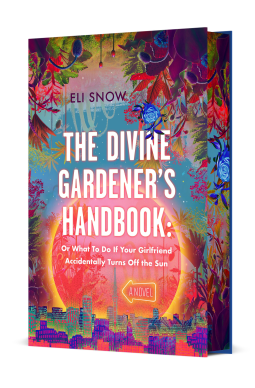
The Divine Gardener's Handbook: A Rollicking Ride With A Rocky Start

book cover for The Divine Gardener's Handbook 

Author: Eli Snow

Genre: Fantasy, science fiction, cozy (?) thriller, political thriller

Publisher: St. Martin's Press

Format: Ebook (NetGalley Copy)

Release Date: August 18th, 2026

Author: Eli Snow

Genre: Fantasy, science fiction, cozy (?) thriller, political thriller

Publisher: St. Martin's Press

Format: Ebook (NetGalley Copy)

Release Date: August 18th, 2026

TW: Death, child imprisonment, death of a parent (On page), mass riots


I was pleasantly surprised  with this novel, even after a bit of a frantic first chapter. 

But first, the plot: Cyprin lives in a megacity, where rats are some of her best friends (she doesn't have many). She desperately wants to leave her sunless existence, and dreams of working for The Petaled Divine in his Garden, and in the meantime, find her father. To accomplish this, she steals a flower from the Head Gardener of the Garden. However, the Head Gardener Purcell doesn't appreciate this (hot and infuriating) upstart coming in and wrecking things. Can she keep the garden from this new threat? Can Cyprin find her guardian? And what is with the secret area of the Garden no one is allowed to go to? 

The setting makes this book. The massive not built for humans after several layers of habitation city contrasts with the perfect Gardens. Anyone who doesn't work in the Gardens is both physically and mentally trapped. However, the city does contrast with the Garden, and that contrast, also shows the Garden to be a gilded age, which is reflected in its perfect environment. Since flowers and plants are a huge part of the book, the language is suitably vivid. 

 I also appreciate the queer representation, as both Cyprin and Purcell are queer. Their relationship was believable to me. There was a lot of humor in their reactions with one another, and I found myself laughing aloud a few times. This  is not a romance novel, but Purcell and Cyprin both have erotic fantasies so be warned. As an ace person, they were well written and okay to read. 

The first chapter had a breakneck pace, dropping you right into the action. However, this can be a problem, as I had to page back and forth between PoVs because the pacing was very quick. However, once you get the names straight, the story moves forward in a very flowing way. I could also see the characters being very divisive. Purcell starts the story hating Cyprin, and she is quite nasty to her at the start. She does improve later (this is a genuine enemies to lovers story) but be warned. 

Ultimately, if you want a relatively cozy read with some bite,  The Divine Gardener's Handbook is your bouquet of flowers.

Thanks to NetGalley and the publisher for the ARC! 


Final Rating: 4 out of 5 stars 

Drink Paring: Rose infused black tea (for the flowers)

Monday, March 30, 2026

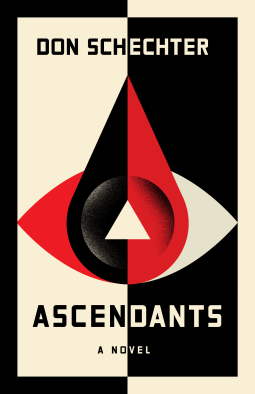
Ascendants: Should've Been A Show

book cover for Ascendants

Author: Don Schechter

Genre: Science fiction, character drama, thriller, general fiction

Publisher: GHB

Format: Ebook (NetGalley Copy)

Release Date: March 24th, 2026

TW: death, mental deterioration (Alzheimer's like disease) rape (implied), medical experimentation, unwilling drug use, rioting, military occupation, threat of a child, death of a child (mentioned on page)


I really, really wanted to like this book, but there were several fatal flaws that ruined a fantastic premise. 

But first, the plot: In the far future year of 2060, there is scientific proof of life after death. The only ones who have access to this afterlife are the Ascendants, the people genetically destined to for a life after death. Everyone else will decay and rot in the earth, becoming Biomass. With the machinations of The Jacobs Institute, the shadowy organization that found discovered Ascendance puppeting everyone behind the scenes, will our characters (the scientist who discovered ascendance, a grieving husband and a firebrand daughter who's just fed up with it all) be able to survive in this new world? 

I loved the central premise of this book. Ascendance is pure genetic inequality, which gives a bleakness that is very rare (I've only seen GATTACA do the same). I loved that the author included clerical characters to show how this kind of discovery impacted major wold religions.

However, this was the only compliment I could give this book. The dialog was detached and clinical, which made a certain amount of sense for some of the characters, but not everyone. However, everyone spoke in this clinical style (including a supposed to be seen year old child), which was jarring, and hard to follow. 

The setting was non-existent. There were no descriptions that really stuck because everything was, again, in this clinical style. (Third person limited is usallyu fine, but this didn't help the feeling in this case.)  Apparently the book took place in Boston, which was news to me. Nothing distinguished the city from every other city. There were a few significant locations that had more than a modicum of description but other than that, there was no significant vivid description. (Everything read like a script.)

The plot was hard to follow as I'd regularly confuse characters with one another, and  I thought that the third act reveal was unnecessary, set up for a sequel that didn't wrap up the story. 

All in all, I hope to see this as a show one day, but honestly would've DNF'd it if this wasn't an ARC.  Maybe others would enjoy it where I couldn't. 

Thanks to Netgalley and the publisher for the ARC! 

Final rating: 2.5 (rounded up to 3) Stars

Drink paring: oolong style green tea tea for musings on life

Monday, March 23, 2026

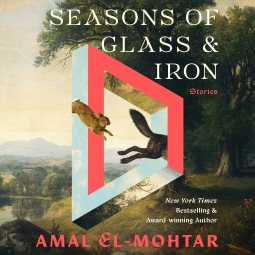
Seasons of Glass and Iron: A Dream of an Anthology, From a Favorite Author

book cover for Seasons of Glass and Iron

Author

Genre: Fantasy, romance, romance elements, short story collection, BIPOC rep, literary fiction, erotic elements, science fiction

Publisher: Macmillian Audio

Format: Audiobook (NetGalley Copy)

Narrator:  Rachel Elizabeth Smith

Release Date: March 24th, 2026

TW: spousal abuse, death, war, racism (Islamophobia and others), body horror, Alzheimer's disease, gaslighting 

I encourage you to look at reviews by Arab/Lebanese//Middle Eastern reviewers, as I am a white American and have definitely missed the nuance in some of these stories.

I loved almost every story in this collection (even the ones I didn't understand, that were in Arabic) and several of them made me cry. 

I aspire to craft prose like Amal El-Mohtar. El-Mohtar's language is so vivid and rich, which lends itself to both novels and short stories. Because of her language, each story was like a fig fresh from the tree, bursting with sweetness and sensation. Every time she described a place, it was like I was there. Every time she described a character, it was like I could see them. However, just as the sweetness is sharp, the sadness cuts just as much.

I love that from the outset, this collection is about women. Women with complicated histories with their families, women fighting back from abuse, women finding comfort in one another, both platonic and romantic.  Women who are not good at all as well. And all different genres too! 

El-Mohtar is Canadian but is of Lebanese decent, and a lot of these short stories have a theme of something not fitting in to society or it's expectations and having to carve out a path for themselves through tragedy. I relate to this, and it was interesting to see her perspective on that displacement. There are also themes of sexual assault and abuse and the trauma of war running through some of the stories, which are pretty explicit, so be aware.

There is one story here that is erotically explicit ('To Follow the Waves') so be warned. The erotic elements of this story were as well done as everything else, even if the main character was reprehensible in her actions. 

I personally can't stop thinking about 'And Their Lips Rang With the Sun' and  'The Truth About Owls' and 'Florilegia, or, Some Lies About Flowers,' but every story was a joy to listen to. 

I would be doing as great disservice if I didn't mention the fantastic narration by Rachel Elizabeth Smith. Her voice had this flowing quality, and she especially was good at speaking Arabic, making the language sing. 

I'm so glad El-Mohtar gave us this anthology. I can't wait to read what she gives to us next!

Final rating: 5 out of 5 stars 

Drink paring: Jasmine tea, for Damascus and women made of flowers


Witch Season: An Uneven But Compelling Read

book cover for Witch Season

Author: Julia Bianco

Genre: Urban fantasy, adult fiction, romance, romantasy, BIPOC rep

Publisher: St. Martin's Press

Format: Ebook (NetGalley Copy)

Release Date: March 3rd, 2026

TW:  murder, death of a teen (on page), arson, cutting of the body, drug use, addiction

I really really wanted to love this book, but there were a few glaring flaws that caused me to only 'like' it.  

But first, the plot: Kathrine is a witch, who puts her blood-cut powers to use serving as the enforcer of the L.A. based Aestas coven. Aestas protects unsettled witches like her-witches that weren't born into a magical family, and instead awaken to their powers in tragedy-from prejudice and discrimination, and gives them community. However, that community is threatened when Silas Khatri, leader of the powerful coven Noctis comes to inspect them, looking for any excuse to bring the wayward coven to heel. At the same time that she must deal with the infuriatingly handsome rich boy, Kathrine must also deal with an insidious threat eating her coven alive from the inside, and may be forced to work with her enemy to save it. 

The world-building was the best part of this novel. I loved the distinction between old magic (magic relying on ritual and reagents, which doesn't work half the time, or worse works too well) and the new magic that Kathrine and her coterie do (storing runes inside themselves through meditation, and using their blood to cast); it really felt like an evolving system. I am also a sucker for political jousting and I loved seeing how the covens reacted to and pushed against each other. (Libertad rules!) The settings were vivid and believable enough as well (I love Aestas's restaurant). The language was snappy and easy to read, matching such a vibrant setting, as well.  (Although, are there not bloodborne diseases in this world? Cool if true.)

However, this was a character piece, and the characters fell flat to me. Katherine was fine, however, her self-flagellation became tiresome after a while. I outright  hated the MMC. Silas was a whiny rich boy, and his actions were reprehensible. I hadn't forgiven him by the end of the book, even after he 'atones.' I cannot say more about his actions due to spoilers, but every time he was on page, I wanted to scream at him. It is a shame, because I love that he is a PoC too, it's just his constant 'oh pity me' routine was so grating. The side characters were a bit better; all of Kathrine's friends (including the head of the Libertad coven, my favorite character) were very cool and very diverse (queer rep, and more BIPOC rep, yay!), but they weren't enough to override my disdain for Silas. I do appreciate that there were multiple POV's however, and that kept me trucking along.  

The romance was a bit on the rushed side for me as well. This isn't really an enemies-to-lovers book, more like 'distrustful colleagues to lovers' which is fine. It's the speed at which they fell for each other that I can't get over. The entire novel takes place over a very short period of time (a week or two in October) and so everything was way too fast. Kathrine and Silas were instantly attracted to each other (which I'm fine with; sometimes that happens) but then almost immediately fell for each other and started having sex, despite their fraught positions. It was unbelievable and took me out of the novel. However, the sex scenes were well written, if abrupt, and there was definite heat coming off the page that had nothing to do with L.A. They were plentiful and explicit, so be aware of that.  

I may seem harsh on this book, but I still want to read a sequel. I hope that Silas can truly improve, and that the romance can be fleshed out a bit more in the future. If not, I'll still be here for the fantastic world-building and Libertad in specific. 

Thanks to the publisher and NetGalley for the ARC!

Final rating: 3.5 (rounded up to 4) stars 

Drink paring:  Light smoke lapsang to think of fire


Saturday, March 14, 2026

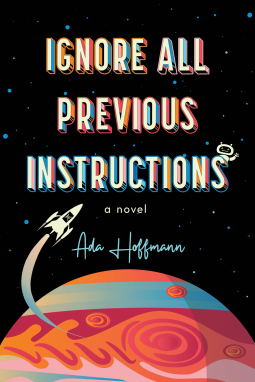
Ignore All Previous Instructions: Great Representation in a Sci-Fi Heist Romp (Also, Screw Gen AI)

book cover for Ignore All Previous Instructions 

Author: Ada Hoffman

Genre: Adult fiction, dystopian fiction, romance, queer lit, BIPOC rep, heist fiction, pirates (although de-emphasised)

Publisher: Tachyon Publications

Format: Ebook (NetGalley Copy)

Release Date: May 12th, 2026

TW: ableism, arson, suicide (teenager, discussed, not depicted on page) homophobia, transphobia (societal)


I encourage you to look at reviews by Autistic and ADHD reviewers, as I am (as far as I know) neurotypical, even though I live with an AuDHD partner.

This book stuck with me, and its prescience is something that I hope will come top pass, even if the main character often made me frustrated. 

Kelli is one of the 10 percent of people who still have a job. She works for Inspiration as a script editor and AI prompter, where she makes sure that her show (Ship of Fools) and it's main character (Orlando) follows company guidelines, and that her own creativity doesn't contrast with the AI scripting too much. Inspiration's shows are basic, shallow and flat, made to be as marketable as possible to a common mean, and Kelli sometimes does struggle to reign herself in, even when she always follows the rules. When she takes a call from her former partner and current pirate (smuggler), Rowan (a trans man), this careful routine is destroyed. Rowan is in trouble, and Kelli is the only one who can help him. Her task is simple: Talk to a superfan of the show, and Rowan gets out of debt with the fan's mob boss mother. But of course, nothing is that simple. When she;'s drafted into stealing her own work from her company; she must make a choice. Will Kelli be able to make it out of this in one piece? Will she ever sort out her feelings for Rowan?

This is primarily a character drama, with the heist taking a distant second, as the ostensible driver of the plot. The characters were very vivid, even painfully so. The third person POV follows Kelly and Kelly and Rowan/AM  as children. There are also points where there are written prompts from Kelly's point of view. So, I do like that you get a portrait of both characters that is incredibly detailed. I hated Kelly as a character, but I really understood her. Kelly is a pathological rule follower, incredibly naive, but also has a strong sense of justice. So when she immediately tries to turn Rowan in, I hated her for it. However. I understood why she tried to turn Rowan in, and because of the intimate POV, there was no choice but to sympathize with her. I also did aside from the POV, as it was very clear that Kelli was raised by a robot who taught her the most basic and milquetoast ways to interact socially. If you can stick with her, the ending is worth it.

Rowan is the other half of this duo, and I love him. He very clearly has ADHD, even if his parents don't want to label it  and as Am, was the first person to really break Kelli's shell. I enjoyed reading about his coming of age journey, and also, seeing how deep his friendship went with Kelli. When you finally learn what tore the two apart, it is devastating. I also appreciate that through him we see how queerness is suppressed (you can't talk about it for fear of influencing the youth/complicating a simple algorithmically fed society, but are 'allowed' to be queer in private) and how he hacks the system. He was a bit of a scoundrel as well, and later in the book, you see why. I was rooting for him from the get-go. 

The side characters were also compelling, and you could tell that they had their own problems and reasons for  joining the heist. (I really liked the representation in this group of side characters as well.) The representation was also well researched, and realistic. 

Aside from the characters, the worldbuilding was serviceable, and somewhat realistic. Kelli lives on Callisto, and travels in a ship to other places, and the nitty-gritty of space travel isn't glossed over. It was a great backdrop to a story of self discovery. The heist was also serviceable, but definitely did take a backseat to the character's lives. 

All in all, despite the fact that I didn't enjoy the main character, I really enjoyed and appreciated this book. If you want a queer space romp with great representation, I'd say go for it. It was a great read.

Thanks to the publisher and NetGalley for the ARC! 

Final Rating: 4.5 (rounded up to 5) out of 5 stars

Drink paring: Young darjeeling for queer love resparked (maybe)  

Wednesday, March 11, 2026

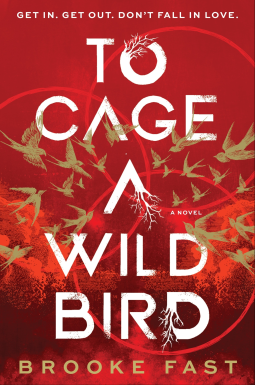
To Cage a Wild Bird (Deluxe Limited Edition): A Shaky Start To A Suspenseful Prison Break

book cover for To Cage a Wild Bird (Deluxe Limited Edition)

Author: Brooke Fast

Genre: Adult fiction, dystopian fiction, romance, queer themes, BIPOC rep

Publisher: Avon and Harper Voyager

Format: Ebook (NetGalley Copy)

Release Date: March 3rd, 2026

TW:  murder, sexual assault, surveillance, death, harm to children, death of children (on page, but not dwelled on), starvation, state oppression, ambush beat downs, attempted rape, incarceration, police/guard brutality


Despite some clunky exposition and shallow worldbuilding at the beginning of the novel, I enjoyed this story. Beware of spoilers, as the romance is prominent here, and the best parts of this book are in Endlock. Check out my final rating below!

But first, the plot: Raven Thorne is a bounty hunter in the city of Dividium, where she is paid to turn in criminals to be locked up in Dividium's prison, Endlock. Endlock is a hunting ground-rich citizens of the city can pay to hunt prisoners and keep their body parts as trophies. (There is a whole industry of taking the teeth from these prisoners and fashioning them into jewelry.) When Raven's brother Jed gets thrown into the prison for punching one of the city's councilors, she resolve to get him out by any means necessary. To that end, she goes to The Collective, a resistance group her parents were a part of. They give her a mission: break a prisoner out of Endlock and the siblings will go with them to the neutral Northern Settlement, away from Dividium. However, a prison guard named Vale takes an interest in Raven. Will this blow her cover? Why does she feel attracted to him? Will Ravenm will be able to survive Endlock? 

The characters carry this book. Raven was actually a delight, as she reckons with what she did before coming to Endlock, and learns how to open up in turn. I do appreciate that she is haunted by  the people she sent to this terrible place. I appreciate that everyone was standoffish with her or even hate her at the beginning. I also appreciate that Raven doesn't feel like she deserves good things for a while.   

I was also here for the side characters. Jed, August and Kit and Yara and Momo make a perfect found family. I like that they are more of a significant part of the book that you would expect, as they keep Raven sane in this prison. I also appreciate the diverse representation of this friend-group, as Kit and Yara are a couple together (and have to deal with realistic expectations and trials of being in a prison) and all of them with the exception of Jed seem to be people of color. I also appreciate that everyone gets a few scenes where their characters shine, and you can tell they have their own lives and dreams outside of the prison. Jed and Raven's bond is very sibling realistic, and I also appreciate that. This makes a later gut punch all the more impactful, which made me cry.  

I really appreciate how the romance was done here. Thank fuck this wasn't oppressor/oppressed. (I genuinely hate that trope so much, as it's a terrible outgrowth of 'I can fix him'.) Vale is on side, even if it doesn't seem like it at first.(if a reader He and Raven do have chemistry, which deepens when she is in close proximity with him. (He also does say 'Who did this to you?" but doesn't fly off the handle at the culprit, or get extremely angry, which I appreciate.)

Speaking of 'close proximity', there are explicit sex scenes in this book, that a         re woman centered. I appreciate that Vale knows where the clit is, acknowledges the power dynamic between them, and is actively looking for consent. Raven is an active participant in her own  pleasure which I also appreciate. As an Ace person, I appreciate that, as the scenes were well written and also tense, as they could be caught at any moment by the other guards of Endlock. (The PIV scenes were fine as well, but as an Ace person, I once again, skimmed over them, but they're competently written fro what they are.)

With all of this good, there is also bad. First, the setting. Dividium as a place is incredibly generic. There are three levels that are 'divided' (Upper, Middle and Lower) and they are going through a famine, which fuels the prison dynamics of Endlock. This setting is only really distinguished by the 'trophy hunting', which makes the setting outside of Endlock feel sketchy. Even Endlock reminds me of the Hunger Games, down to the traps placed later in the book. This will not be a dealbreaker for a lot of readers but I couldn't stop making comparisons in my head. (This in turn made me worry that this was a Young Adult book, which considering the level of erotic and explicit scenes, it shouldn't be.)

Second, the expository prose at the beginning of the book almost made me stop reading. Raven starts the  book pursuing a criminal, and what should be a thrilling chase scene gets stopped dead by expository prose barely related to the task at hand. This stops after the first 20 or so pages, but it was so jarring that it took me out of the story very quickly. 

However, I am glad I stuck through it. Mind the trigger warnings, and if you could get through a really clunky first chapter, you will enjoy this book. I will be looking for a sequel, and hoping the author writes one.  

Thanks to Avon and Harper Voyager and Netgalley for the ARC! 

Final Rating: 3.75 (rounded up to 4) out of 5 stars 

Drink Paring:  Dark roast da hong pao in a dark room

Tuesday, March 10, 2026

The Whitechapel Full Moon Society: A Refreshing Take on Jack the Ripper


Author: Elizabeth DeLozier

Genre: Historical fiction, gothic fiction, adult fiction, mystery, true crime, supernatural fiction 

Publisher: Dutton 

Format: Ebook (NetGalley Copy)

Release Date: August 25th, 2026

TW:  Murder, sexual assault, attempted rape, mutilation, drug use (administered and unwitting) slight period typical homophobia, period typical misogyny, slight period typical racism

The Whitechapel Full Moon Society was a gripping, suspenseful and heartfelt read. 

But first, the plot: Caroline Foster is a noble down on her luck. In a bid to escape the crushing poverty brought on by her father's gambling debts, she goes to London to find her missing brother, Charlie. However, when she arrives at the Whitechapel Full Moon Society, she is told that her brother hasn't been there for months, and they almost close the door in her face. Desperate, VCaroline says that she's looking for a position as a maid, which the Society desperately needs. She is reluctantly hired, as the last maid was killed by none other than Jack the Ripper. As Caroline settles into life at the Society, caring for it's diverse and strange guests, she is given three rules: don't go to the iron barred door on the second floor, don't ask personal questions and remain in her room during the full moon. Will Caroline be able to find her brother? What is the Society hiding? Where will the Ripper strike again?

The characters were a huge part of this novel, and they did their job well. I loved Caroline in particular; her love for her brother is realistic and heart-wrenching, and she has a tenacity that resonated, especially at the beginning of the novel when her desperation was palatable. However, her extreme devotion to her brother might turn some readers off, as he is never far from her thoughts, and that may get repetitive. In addition to this, she is a character with flaws, and exhibits homophobia and racism towards the Society's guests. However, she does grow out of this, and by the end, I was fully rooting for her character. Just be warned it takes a bit for her to get there. 

The side characters (namely, Charlie, the boarders, (including Rab her love interest) and the proprietress of the boardinghouse are either vivid (in the case of Rab and the manager of the boardinghouse) or at least serviceable (like with most of the lodgers.) I wish the lodgers were more fleshed out, but a few of them do get scenes where they shine, and they are all men with him I'd love to learn more about. This also extends to their big secret, which I won't elaborate upon for spoiler reasons, but I wish we spent a bit more time with it. I appreciate the representation (of both PoC and differing religious practices) and it was done in a 'realistic' way if that is a deal breaker. The same goes for the queer rep, but due to spoiler reasons, I will not elaborate. 

The setting of this novel was done well too. I really felt the grime and pollution of industrial London, along with the unexpected patches of beauty in the darkness. However, as the book mostly takes place in Whitechapel and another poorer district of London, it feels a bit claustrophobic. It also means that there is a level of convenience and coincidence that shouldn't happen in a large city but that is mostly forgivable. 

The mystery was compelling as well, if a bit obvious once mulled over. However, the book has a few red herrings that did trick me, so that was appreciated. The real life victims of Jack the Ripper were treated with respect which I appreciate as well. I usually stay away from true crime stories because of a glorification of the killer, but I'm glad the author was more tasteful than most. 

All in all, I really did enjoy this book, even if certain parts left me wanting more. 

Thanks to NetGalley and Dutton for the ARC!  

Final Rating: 4 out of 5 stars 

Drink Paring: Camomile tea to calm the wolf inside


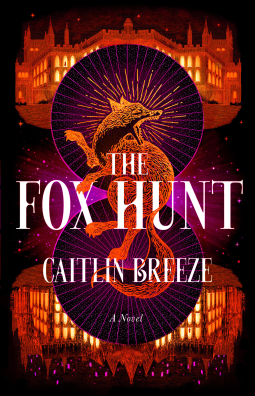
The Fox Hunt: Dark Acdemia into Fantastic Fey Fantasy

book cover for The Fox Hunt 

Author: Caitlin Breeze

Genre: Adult fantasy, urban Fantasy (faeries), dark academia (in the first half), romantic but not romantasy, queer themes but not queer lit

Publisher: Little, Brown and Company

Format: Ebook (NetGalley Copy)

Release Date: February 24th, 2026

TW: Misogyny, murder (attempted and followed through), imprisonment, near drowning, sexual assualt

So, this book took a genre that I usually bounce off of (dark academia) and turned it into a fey-wild romp in an intricate and magical world. Along with sacred cannibalism and queer themes, I love anything and everything to do with the fae.  As such, I loved this book. 

But first, the plot: Emma Curran is a scholarship student studying at the University, the most prestigious university in the UK (and possibly the world).  Born to a renowned biologist mother and a deadbeat father, Emma is more at home in the University's rivers and streams among the animals than in the University's oak paneled halls. However, when Emma wins a full scholastic prize to continue her research, she's thrust into the glittering underbelly of the University's most secret society, the all-male Turnbulls, and their leader, the beautiful Jasper Balfour. The Turnbulls host wild parties and one night suggest something: a fox hunt. The girls will be the foxes and the boys, the hunters. To escape these murderous boys, Emma begs the City beneath and between the University to save her. With that boon a bargain is struck, and the Night City will claim it's due. Can  Emma fulfill her debt? Can she take revenge on the Turnbulls? Will she ever be human again?

This book hooked me immediately. That began with the characters.Emma is an interesting main character; passive and a bit out of her depth at first, she grows into a capable and knowing character near the end of the book. Her best friend, Nathaniel (or Nat), is wonderful and even though he was decidedly a side character, I was very happy whenever he showed up. I appreciated that he was also a British person of color, and that there was mention of his trying to rediscover hisUgandan heritage and how that clashed with his father's full assimilation. The other characters in the first half of the novel were nice as well, but they are a bit thin. I loved the fey characters (special shout out to Robin), but due to spoilers, I won't speak more about the, except to say that they are mostly portrayed as the fey should be, delightful and delighted but also dangerous, cunning, and inhuman (sorry ACOTAR fans). I like it when the fae are odd, and cunning and a bit cruel, always using wordplay to get more out of a bargain than the human petitioner. There is also queerness in this novel (Nat is gay and Emma is bisexual) and I loved the representation. It felt natural.

Note, this isn't a romantasy, but there are romantic scenes here. However, I do not think they are  particularly sexual, usually stopping on a kiss or cutting to black if the characters have sex. As an ace person, I found this fine. However, there is non explicit  sexual assault, and the use of a date rape drug by a minor character to another character. 

I loved the Night City as a setting and it's class dynamics that mirror the class dynamics at the University in the first half of the book. I like the undercurrent of desperation that the City has, where it feels like the upper class is partying while the City crumbles. The setting is rich, but also has room to be added to, especially after the end of the novel. The university was a bit more sketched in, but the Library was incredible, so that brief sketch in is definitely forgivable. The third person pov and vivid language really do help to smooth over any wrinkles in the current story. Although, I hope that in a (hopeful) eventual sequel, these holes will be filled in so to speak.

Now, with mention of the first and second halves of the book, I must give a warning here. This is not your typical dark academia book. After the titular Fox Hunt, the novel turns into a full blown urban fae fantasy. I love the fae, so I was fully on board for this change, but if you're looking for a full dark academia, you might not enjoy the switch. However, these two genres are woven together well, and if you like both genres (like I do) you'll love this book. Give it a try, and you'll dream of dark University's and fae bargains for weeks. I eagerly anticipate a sequel.

Final Rating: 4.75 out of 5 (rounded up to 5) stars 

Drink Paring: Tongmu light smoke lapsang tea for the dark City and its attending university

Monday, February 23, 2026

Hello, Limerence: An Explicit, Beautiful Trainwreck


Author: Momo Yamaguchi

Genre: Humor and satire, queer fiction, POC Literature, romance (?), Japanese literature, adult fiction

Publisher: Mariner Books

Format: Ebook (NetGalley Copy)

Release Date: August 18th, 2026 

TW: violent fantasies (including murder, and shoving things up orifices) sexual assault, rape, death of a family member, isolation (pandemic related), homophobia (slight)

When the blurb compared this to Fleabag, they weren't kidding.  A ridiculous and relatable romp, Hello Limerence isn't for everyone, but for the ones who click with it, they'll love it. 

But first, the plot:  Mika is a 25 year old salarywoman in Tokyo Japan.Stuck in a dead end job, she seeks escape in romance and sex, desperate to lose her virginity. When she meets Tyler, a Japanese American expat, and another man, she does proceed to lose her virginity, but that isn't enough. Obsessed, or experiencing limerence if you prefer, she spirals when Tyler doesn't reciprocate her feelings. Together with her best friend Mika, she tries to navigate her 20's in modern Tokyo, even through a pandemic and a really shitty boss, which she murders in elaborate fantasies. Can Mika find true love, or will she be in limerence for the rest of her life?

The best part of the book was main character, Mika. She is an incredibly relatable 20 something, self-obsessed and chronically online, trying to find herself in our world. This novel is written in first person POV, so readers are in her head the entire time, and are privy to her wild and vivid revenge fantasies, and every sordid detail of her lust driven insanity. As a former 25 something, she's painfully realistic, including the chronically online obsession with social media and her need to find her true self. I also appreciate her perspective as a Japanese woman and her critiques of Western imperialism and her own culture. She's a mess, but a mess with potential past the solipsism.  (I also resonated hard with her jobless status later in the novel.) I love the messy queer representation as well; but to go into that would be spoilers, so I will not. 

I also like the tone. Mika's perspective is a roller coaster ride, one minute she'll be calling herself a 'loyal ho,' and the next minute she'll be mourning the death of a family member. Her sardonic tone can be a bit much sometimes, but I enjoyed it. I especially loved the fantasies, which were patenly hilariious and insane. 

The setting is a bit less vivid; I never forgot that we were in Tokyo but a large chunk of the later  parts of the book takes place in her apartment because of a (satirical) COVID-like pandemic. I wish that the setting was fleshed out more, but I understand why it wasn't. 

Hello, Limerence is a graphic and raunchy read, which isn't for everyone. Be prepared to read about close examinations of the body, and also to read gory fantasies against misogynists. However, if you can move past these roadblocks you will get a raw character portrait of a complex and morally grey character. 

Final rating: 3.5 out of 5 stars (rounded up to 4)  

Drink paring: Darjeeling, for the darkness and floral bite 


Sunday, February 15, 2026

A Fate Worse Than Drowning: A Tight, Terrific Novel


Author: A Fate Worse Than Drowning

Genre: Horror, Historical Fiction, Queer Fiction, Gothic Horror

Publisher: Poisoned Pen Press

Format: Ebook (NetGalley Copy)

Release Date: July 21st, 2026

TW: torture (on page), sexual assault (on page), murder (on page), misogyny (both period typical and modern), death, spousal abuse, gore, mention of slavery (allusion to)


Give me a book with either: sacred cannibalism, deals/living with an extra-planar entity, tea and queerness. This book has two of the three, and I predictably wanted to drown in this book. What a gripping reading experience.

But first, the plot. in 1809, Elle (Mary Eleanor) and her sister Liney (Caroline) live alone on a desolate bit of land called the Devil's Island, in the Halifax harbor. New arrivals, they've run from two dead parents and a man who is after their fortune. On the island, after killing the previous lighthouse keeper, Elle tends to the lighthouse, which guides sailors away from their watery graves. Or, at least that's what she tells her sister she's doing. In reality, instead of saving sailors, Elle is tasked with using the demonic powers given to her from a deal with the devil to sacrifice souls. Which, is rather easy, when there are choppy seas and deep caverns. Elle must do this, to keep her sister and herself safe, or the devil may come after her sister next. Liney dreams of a wider world. Sickly her whole life from childhood asthma, she sits caged; first with her family (forced to marry a man when she loves women), and then with her beloved sister. Elle will do anything to protect her, except let her go. The fragile peace of this island is interrupted when the devil demands an increase in souls, and a beautiful woman washes up on shore. Now, will Elle sacrifice this girl, and take away the only person that Liney truly loves? 

The characters are one thing that made this story for me. Elle and Liney are such realistic siblings, and their bond is a major motivator and draw. I believed that they were siblings. You also get to see both of their POVs, as this book is first person with dual perspectives, and their personalities really shine through. Elle is intense and driven, but also suffocating, whereas Liney is at first, relatively passive, but extremely curious and capable when she allows herself to be. I also love the side characters; Douglas and Bridget especially, but due to spoiler reasons, I'll not mention them further.

The characters are amazing, but what really made this book for me was it's tight prose and plotting. Every twist and caveat was foreshadowed, and make me go 'oh, that's clever' multiple times. Expository dialog and prose was natural and easy to read. The prose is also vivid enough, especially with sensory descriptions, that I could taste things like the hibiscus tea and smell the dying fish. I also appreciate American slavery being mentioned as a terrible force of supernatural evil, but I wish there was POC rep; but I understand why there wasn't.

There is a romance in this book, but the scenes stop at kissing and fade to black; the romantic relationships add to the story and the characters, but romance isn't the end all be all. This book is about queerness and sisterly love and the urge to destroy those who've wronged you; about the seductive temptation of power and the suffering it brings. Mind the trigger warnings; and you'll have a wonderful read with a bittersweet ending. 

Thanks to NetGalley and the publisher for the ARC!

Final Rating: 5 out of 5 stars

Drink Paring: Dark heavy roasted da hong pao for the dark seas, or hibiscus tea for deals with the devil

Saturday, February 14, 2026

The Secret Courtesan: A Basic But Fun Feminist Tale


Author: Kerry Chaput

Genre: Fiction, historical fiction, feminist literature, magical realism (slight) romance elements

Publisher: She Writes Press

Format: Ebook (NetGalley Copy)

Release Date: February 10th, 2026

TW: torture (on page), sexual assault (attempted and on page), murder (on page), misogyny (both period typical and modern), death, stalking/surveliance


The Secret Courtesan was above all else, a timely but still fun read. 

But first the plot: Mia Harding, an Art historian, is having an ethical crisis. She's been told to authenticate a statue dredged from the depths of a Venetian canal, or face career destruction. The sculpture is of a woman in climax, and as the foremost expert in  Italian women's history in art , this should be a simple affair. Say that this male artist, was the author of the sculpture, and be set for life. However, Mia is sure that there's something about this statue that would rock the art world, and refuses. However, this is only half of the story. 

The second POV of this book concerns Sofia, a Venetian courtesan in the Renaissance with an artist's talent and soul. When Sofia's  patron sells her contract, she has to rekindle a man's darkness, and make him paint. Will she be able to stay true to her own soul?

I am of two minds about this book. Mia's story wasn't really impactful. I suppose that is because she did a really dumb thing that seems to be the only reason why she's truly scared of her boss. Her character felt real in that she experienced all too real sexism, but that's all that she left me with. Her romance with her male colleague, a history professor who desperately wanted to hear her out, left me similarly cold. Also, the ending to her story felt too convenient near the end, even if the ending was neat enough. 

I was here for Sofia's story. Venice as it was in the 1600's was fascinating and was described with suck vivid colour by our courtesan artist. Her story felt so much more real, and visceral. I felt her sadness and rage at not being able to practice her art. I felt the weight of those beautiful gowns trapping her. I read this for her story, and was glad to do so. She stuck with me whereas Mia's character fell flat. 

All in all, this novel was worth the read, especially if you like  historical fiction. Just be mindful that a portion of the book might not be to everyone's tastes.

 Thank you to NetGalley and She Writes Press for the ARC! 

Final Rating: 3.5 stars (rounded to 4) 

Drink Paring: Qimen black tea for the dark Venice canals 

Monday, February 2, 2026

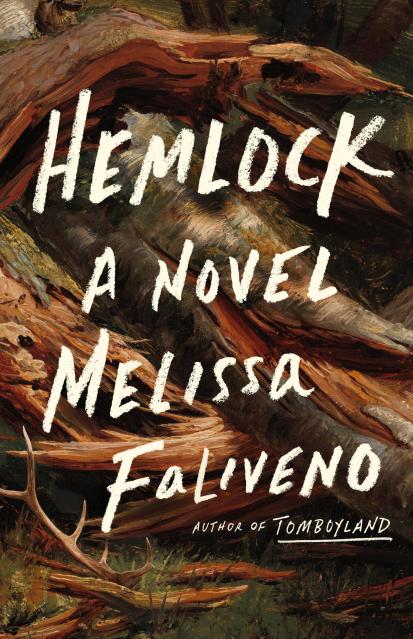
Hemlock: Wild Women and Family Trauma

Hemlock 

Author:  Melissa Faliveno

Genre: LGBTQ+, Fantasy, Adult, Horror, Fiction, Gothic Horror

Publisher: Little, Brown and Company

Format: Ebook (NetGalley Copy)

Release Date: January 20, 2026

TW: Animal death (on page), suicidal ideation (on page) cheating, homophobia, alcoholism, gore (on page), addiction (alcoholism), discussions of religion that may be triggering

I was very affected by this book, and it will stick with me for a long time. (And there's more devouring, yay!)

But first, the plot: Sam, recently unemployed and living in NYC, is trying to start the next chapter of her life. Recently sober, she returns to Hemlock, her family's cabin in the wilds of northern Illinois. She is determined to fix it up, sell it and give the money to her father, and move on. She hasn't been back since her mother disappeared, and that unresolved trauma isn't the only thing that's followed her to these woods. Will she be swallowed by her addictions? Or perhaps turn into something else, something more monstrous?

The prose was the standout of the book. However, the characters were almost as strong, and I am so glad I got to follow them throughout this journey. Sam is a broken, complex, morally grey woman. She is also an unreliable narrator; which heightens the tightrope tension of her growth. I love how distinctive her voice is, even through third person limited. Sam is a character you can see in front of you, a real person with flaws and darker parts of her personality.There were a few times during the novel that I was screaming at her to try something different, or for her not to do what she was doing. Her family were unspoken characters, notable in their absence, and that reflected on Sam too. 

I enjoyed and appreciated the realistic queer and indigenous rep (although as I am a white cis woman, I encourage you to read critiques from reviewers of those groups). The queerness also extends into the sex scene that happens later in the book, which was unsettling to read but also good to read, for me. This is not a romance; this scene is pivotal but not in a romance way. The scene and Sam's nonbinary-ness do play a huge part in the book's themes, and it well woven into everything else. 

The supporting characters were great too, with particular mention towards Lou Ann and Stephen, but for spoiler reasons, I wont go into them.

The imagery of the novel is the true standout. The language really sold the isolation and darkness (both metaphorical and physical) of the Northwoods. When the imagery turned into darkness and horror, it was a natural thing, like the sun setting. There are certain scenes that will stick with me forever because of that. (The truck scene in particular)

Mind the trigger warnings, please. But if you're looking for a harrowing meditation on addiction, religion, family and queerness set in the middle of nowhere, with scenes that stick, this book is for you. It definitely was for me. 

Thank you to NetGalley and Little, Brown and Company for the ARC!  

Final Score: 4 of 5 stars

Drink Paring: Green hojicha, for the leaves of the forest, and a slight dark smokiness


Wednesday, January 28, 2026

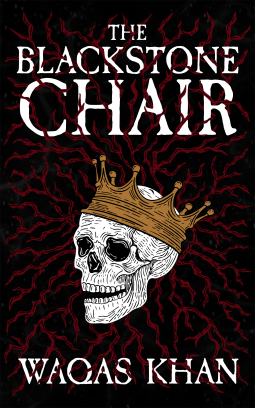
The Blackstone Chair: Extremely Gory and Creepy Fantasy

 book cover for The Blackstone Chair

Author:  Waqas Khan

Genre: Fantasy, Adult, Dark Fantasy, Horror, Grimdark (the protagonist can't change the system, and the setting tends towards darkness)

Publisher: Victory Editing Co-op

Format: Ebook (NetGalley Copy)

Release Date: January 24, 2026

TW: gore, body horror (grafting of body parts onto skin), torture (broken bones, jabbing with hot pokers), rape and sexual assault (threatened), cheating, slight homophobia (alluded to), murder, animal death (undead rat), sexism/misogyny, child death (flashback, on page), pregnancy, birth

The Blackstone Chair is a book about horrible people trying to avoid a horrible fate. It was a difficult read for me. I still really liked parts of it, however and think it might be worth someone’s time.

But first the plot. Ciaran Ryker is the Darkling Prince, heir to the Blackstone Chair. he lives in the lap of luxury and is about to be married to a noble and powerful woman. There’s just one problem. Ryker does not want to be the heir;  as the heir is the next person in line to die feeding the Blackstone Chair. The King’s life force gets sucked out to grow darkroot; the plant that makes necromancy possible, and therefore enables the Ryker family to stay in power. Ciaran is said to have a while before he perishes, but when that turns out not to be true, Ciaran, his uncle Romney and his squire Martigan flee together for one last desperate meeting with the deposed kings of the tundra like south.   

First off, all of the Rykers are bastards, and that includes the main character. I hated Cirian as a protagonist. He was an incredibly complex character, and his upbringing definitely showed through the pages, but as he kept getting into worse and worse situations and continued to be absolutely horrible to the people around him, I found that I didn't really want him to succeed. He is arrogant, cowardly, and mean, fitting for such a setting. If the narrative was getting me to hate him, it succeeded. 

But Ciaran is a peach compared to the rest of his family. They all scrabble like rats in the dark trying desprately to avoid the chair, and none of them are redeemable  at all. I enjoyed reading about Menshe Ryker, as he was definitely my favorite villain, as he was competent and ruthless, as well as a mastermind. He was always two steps ahead for most of the novel, and I liked being drawn along with Ciaran into his schemes.  

My favourite character was Ciaran's arranged wife, Kathrine. She was a delight to read about, even as she also did some horrible things. I sympathized with her, as she was effectively shipped off to marry a dead man, leaving behind a man she loved. I was rooting for her and was disappointed that she was de-emphasised in the end. I hope she gets more time in the sequel. 

The novel is in third person limited, so it holds you away from the characters and really adds to the bleak setting. The setting was a character in its own right, and was definitely the best part of the book. In this world, undead do all of the labour where the Rykers rule. Naturally there are a lot of discontented peasants which come into play later. There are also unique gods and enough distinction between cultures that it doesn't feel like the stereotypical European fantasy setting. 

The thing that made me keep reading was the world-building. I love the concept of people not wanting power because is not really power, it's a cage. I love seeing the effects of extreme propaganda on the sacrifice for slaughter. I loved that the magic here was much more real than a lot of other books, using plants instead of more esoteric things. It made the magic feel visceral. 

There wasn't the only thing in the book that was visceral. There is gore galore, torture and various other things that might turn someone's stomach. This is not very tame, and you can be blindsided if you're not prepared as a reader. Sex however, is de-emphasised, although childbirth is shown on screen. There wasn't any romance here, but the world does have and talks about sex. Also, there is a lot of misogyny, so be aware. 

In my copy, there were a few typos, and repeated sentences; I assume that will be corrected when the book is published.  

All in all, despite everything, I want to read the sequel, just to see how these people end up. I also want to explore the worldbuilding a bit more, and see if there are more systems of magic that can be just as real. 

 If you like bleak settings, with realistic magic systems, and can stomach all of the content warnings, I'd give it a shot! Just be prepared to roll your eyes at the main character.   

Thank you to NetGalley and the publisher for the ARC!

Final Rating: 3.5 stars out of 5 (rounded up to 4) 

Drink Paring: 1985 ding dong oolong, for the darkness and licorice flavor 
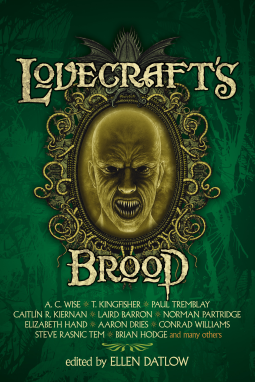
Friday, January 9, 2026

The Halls of the Dead: Bloody Gothic Brilliance

 book cover for The Halls of the Dead

Author:  S.M. Harrow

Genre: Queer fiction, Historical Fiction, Horror, Gothic Horror, Adult, erotic elements but not romantasy

Publisher: Avon and Harper Voyager

Format: Ebook (NetGalley Copy)

Release Date: August 18th, 2026

TW: (taken from the front of the book,  which I love) cannibalism, gore, murder, drowning, miscarriage, death in childbirth, self-harm-induced magic, depression, suicidal ideation, possession and loss of autonomy (added) bugs/pests, period typical misogyny, child abuse 

So, this settled in my stomach, and wouldn't leave. I have a favorite type of book, and it's a book with queer adults engaging in sacred cannibalism. 

First, the plot: In almost like our world Victorian London,  Irene practices necromancy, a banned magic in her world. Together with St. John of the Crypt, her undead husband/servant/ mentor, they resolve to resurrect Irene's lover and wife Agnes who has been killed for practicing necromancy. They do succeed, but Agnes comes back with a devouring hunger, and the magistrate who killed her is prowling around the three, looking for a reason to send Irene to an asylum.

I love the characters so much. Irene is driven and damaged, and a true delight to read. I love the way that she  cares about both Agnes and her magic with a fierce grasping love. St John is also great; I love his perspective as a man who's lived for centuries, and his affection for Irene and Agnes is understandable and appreciated. 

The worldbuilding is subtle, but I love it. Magic exists in this world, and there are forbidden arts that people don't have access to. I love that necromancer's in particular can live on as soul-books. However, I was unclear if this magic was hereditary or could be learned; I assumed it was hereditary.

The language was vivid, and I do appreciate how descriptive it was; the novel is split into three POVs, so be aware (again, I'm not typical, I was able to keep all three in my head, but be prepared to track back if you need to). 

The explicit sex scenes are lovely. There is both a threesome and a scene between Irene and Agnes which I will not go into for spoiler reasons, but suffice to say they were both well written and in character. I loved the way it was very woman-centric. The sex enhances the story, but can be glossed over if that is a deal breaker, this isn't a romantacy, as all three of the protagonists have feelings for one another of some sort. 

 This book is incredibly gory and intense. Hunger as cannibalism is a central theme, along with the aftermath of violation and abuse. If you're into that catharsis like I am, you'll enjoy this.   

 Thank you to NetGalley and Harper Voyager for the ARC! 

Final Rating: 5 Stars

Drink Paring: Shui Xian black tea, sweet and dark